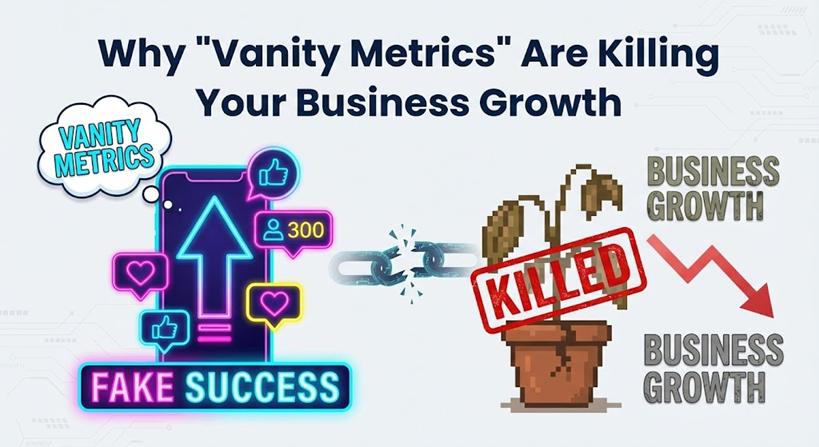
Most businesses today celebrate the wrong numbers.
10,000 followers.
5,000 likes.
200,000 views.
And yet — revenue stays flat.
The real problem? Businesses are obsessing over vanity metrics instead of focusing on the numbers that actually drive growth.
At our agency, we’ve seen brands spend ₹50,000–₹2,00,000 per month on social media campaigns that generate engagement — but not a single qualified lead. The issue isn’t marketing. It’s measurement.
This blog will help you understand:
-
What vanity metrics really are
-
Why they’re dangerous
-
What actionable metrics look like
-
How to shift your strategy toward revenue-focused growth
What Are Vanity Metrics?
Vanity metrics are numbers that look impressive but don’t directly contribute to revenue or business growth.
Common Vanity Metrics:
-
Social media likes
-
Followers
-
Views
-
Impressions
-
Website traffic (without intent)
-
Post shares
These metrics boost ego. They make reports look good. But they don’t pay salaries.
Why They’re Misleading
Let’s say your Instagram reel gets 50,000 views.
Great.
But:
-
How many people visited your website?
-
How many filled out your form?
-
How many purchased?
-
What was your cost per acquisition?
If the answer is “almost none,” then those views didn’t move your business forward.
Vanity metrics measure attention.
Growth metrics measure action.
And business runs on action.
The Real Cost of Chasing Vanity Metrics
1. Wasted Marketing Budget
When you optimize campaigns for engagement instead of conversions, you attract people who like to scroll — not buy.
You may generate cheap clicks, but low-quality traffic leads to poor ROI.
2. False Sense of Success
High engagement can create the illusion that your strategy is working. Teams celebrate performance reports, but sales teams see no difference.
That disconnect damages long-term growth.
3. Poor Strategic Decisions
When leadership relies on likes and views as indicators of performance, they:
-
Double down on the wrong content
-
Ignore conversion optimization
-
Undervalue lead generation efforts
Over time, this stalls business expansion.
What Are Actionable Metrics?
Actionable metrics are numbers directly tied to revenue, growth, and decision-making.
They help you answer one critical question:
Is this activity generating business results?
Examples of Actionable Metrics:
-
Leads generated
-
Cost per lead (CPL)
-
Conversion rate
-
Customer acquisition cost (CAC)
-
Revenue per customer
-
Return on ad spend (ROAS)
-
Sales-qualified leads (SQLs)
-
Lifetime value (LTV)
These metrics tell you:
-
What’s working
-
What’s scalable
-
What needs fixing
They allow you to make informed, strategic decisions.
Vanity Metrics vs Actionable Metrics: The Core Difference
| Vanity Metrics | Actionable Metrics |
|---|---|
| Look impressive | Drive revenue |
| Easy to increase | Require strategy |
| Measure attention | Measure intent |
| Short-term validation | Long-term growth |
| Ego-focused | ROI-focused |
The difference is simple:
Vanity metrics show popularity.
Actionable metrics show profitability.
Why Businesses Fall Into the Vanity Trap
Even smart companies fall into this trap for three reasons:
1. Social Media Culture
Platforms are built around likes, views, and followers. Naturally, businesses start optimizing for those numbers.
But platforms prioritize engagement — not your revenue.
2. Easy Reporting
It’s easier to show:
“Engagement increased by 200%”
Than to explain:
“Cost per acquisition decreased by 18%, improving profitability.”
Vanity metrics are simple. Growth metrics require analysis.
3. Delayed Sales Cycles
In B2B and high-ticket services, sales don’t happen instantly. So teams measure what they can see immediately — likes and views — instead of tracking conversion pipelines properly.
How to Shift from Vanity to Growth-Focused Metrics
Here’s a practical framework we use with clients.
Step 1: Define Your Primary Business Goal
Ask:
-
Do we want more leads?
-
More sales?
-
Higher average order value?
-
Repeat customers?
Your marketing metrics should align with this goal.
If your goal is revenue, likes are secondary.
Step 2: Build a Clear Funnel
Every marketing activity should fit into a funnel:
-
Awareness
-
Consideration
-
Conversion
Awareness metrics (like reach) matter — but only if they feed into conversion metrics.
If your funnel breaks between awareness and conversion, that’s where your optimization focus should be.
Step 3: Track Conversion Events Properly
Set up:
-
Form tracking
-
Call tracking
-
Purchase tracking
-
CRM integration
Without proper tracking, you can’t measure actionable performance.
This is where many businesses fail. They invest in ads but don’t measure actual business impact.
Step 4: Measure Cost Efficiency
For sustainable growth, monitor:
-
Cost per lead
-
Cost per acquisition
-
Return on ad spend
If you’re spending ₹1,00,000 per month and generating ₹80,000 in revenue, high engagement won’t save you.
Profitability matters more than popularity.
Step 5: Align Marketing with Sales
Marketing should not operate in isolation.
Ask:
-
Are the leads qualified?
-
Is conversion happening post-lead?
-
Where are drop-offs occurring?
When marketing and sales align around revenue metrics, vanity metrics lose importance naturally.
When Vanity Metrics Actually Matter
To be clear — vanity metrics are not useless.
They matter in:
-
Brand awareness campaigns
-
Influencer collaborations
-
Early-stage visibility building
But they should never be your primary KPI.
Use them as supporting indicators — not success benchmarks.
The Growth Mindset Shift
Here’s the shift every business must make:
Instead of asking:
“How many likes did we get?”
Ask:
“How much revenue did this generate?”
Instead of:
“How many followers do we have?”
Ask:
“How many qualified leads entered our pipeline?”
This mindset alone can transform marketing performance.
Real Growth Comes from Strategic Measurement
Businesses that scale consistently focus on:
-
Data clarity
-
Funnel optimization
-
Profitability
-
Customer lifetime value
Not surface-level engagement.
When you measure what matters, you:
-
Allocate budgets smarter
-
Improve conversion rates
-
Reduce acquisition costs
-
Increase revenue predictability
That’s real growth.
Conclusion: Stop Chasing Applause. Start Chasing Results.
Vanity metrics feel good.
Actionable metrics build businesses.
If your marketing reports are full of impressions but your revenue isn’t growing, it’s time to rethink your KPIs.
The goal isn’t to go viral.
The goal is to grow profitably.
When you shift focus from attention to conversion, your marketing becomes an investment — not an expense.
FAQs
1. Are likes and followers completely useless?
No. They help with brand visibility and social proof. But they should not be your primary growth metric.
2. What is the most important metric for business growth?
It depends on your model, but typically revenue, cost per acquisition, and conversion rate are key.
3. How do I know if I’m focusing on vanity metrics?
If your reports highlight engagement but don’t show leads, conversions, or revenue impact, you’re likely focused on vanity metrics.
4. Can a campaign have both vanity and actionable success?
Yes. A campaign can generate high engagement and high conversions. The key is optimizing for conversions first.
Ready to Focus on Metrics That Drive Revenue?
If you’re tired of impressive reports without business growth, it’s time to shift your strategy.
Let’s build a marketing system that tracks what truly matters — leads, conversions, and revenue.
Visit our Contact Us page to start building performance-driven growth today.